Showing posts with label spiritual growth. Show all posts

Friday, January 30, 2026

On Being Mindful

 
The habit of ignoring our present moments in favor of others yet to come leads directly to a pervasive lack of awareness of the web of life in which we are embedded. 
 
This includes a lack of awareness and understanding of our own mind and how it influences our perceptions and our actions. It severely limits our perspective on what it means to be a person and how we are connected to each other and the world around us. 
 
Religion has traditionally been the domain of such fundamental inquiries within a spiritual framework, but mindfulness has little to do with religion, except in the most fundamental meaning of the word, as an attempt to appreciate the deep mystery of being alive and to acknowledge being vitally connected to all that exists. 
 
By Jon Kabat-Zinn

Thursday, May 8, 2025

Ahamkara Mudra

Ahamkara mudra is one of the most powerful mudras for self-assertion and confidence. It helps the practitioner to combat fear, and dispel timidity and find his or her center of being. This mudra activates the Manipura chakra (solar plexus chakra) and is used when self-doubt arises and more courage is needed.

Ahamkara is a Sanskrit term to describe egoism, self-conceit or the self-consciousness. The word literally means "I-maker."

To form ahamkara mudra, bend your index finger slightly. Place your thumb on the middle phalanx of the index finger and exert a slight pressure. Keep the middle, ring and small fingers stretched out but relaxed.

In this mudra the thumb represents Brahman or the ultimate reality of the universe; the index finger represents ego, or ahamkara. The ego bends down and submits to Brahman. But this mudra also has a second meaning that includes the elements. The index finger is associated with the air element; the thumb is the fire finger. When the fire is placed on the bent air, the hand gesture represents clarity, harmony, and the alignment of the mind with devotion. 

Thus, the ahamkara mudra represents both humility as well as the self-awareness, self-confidence, and trust in one's own deep intuition.

Ahamkara mudra should be formed with both hands during meditation. You should be able to hold it for a few minutes and perform it on a regular basis, especially if fear and doubt dominate your daily affairs. This mudra will help you strengthen your will to face difficulties without fear. It will empower you and give you courage on your personal journey.

By Dominique Allmon

Dominique Allmon©2025

Tuesday, April 4, 2017

Ikigai - Japanese Secret To A Long And Happy Life

Ikigai by Dominique Allmon©2017

People can feel real ikigai only when, on the basis of personal maturity, the satisfaction of various desires, love and happiness, encounters with others, and a sense of the value of life, they proceed toward self-realization. - Kobayashi Tsukasa

We seldom meet people who do not wish for a happy life. For many, the struggle is hard, but it shouldn't be. One has to simply love what one does. That's all. 

Nothing easier said than done. Unfortunately, most people end up in jobs they hate and vegetate unhappily till their retirement. Life is postponed for that later moment in time, when there is more money, more freedom, more time, more leisure, to do what we please and love. Unfortunately, that moment seldom comes, but if it does, it does not last long and does not bring the effect that we had hoped for. Happiness seems to be a habit that must be cultivated all life long. One does not simply retire from a tedious job and become happy the next day, but one can certainly change the direction of one's life early enough not to end up frustrated at an older age.

Have you heard of Ikigai? 

Ikigai is a Japanese concept of our reason for existence, very similar to the French raison d'être, or the ultimate purpose of one's life. The Japanese believe that everybody has ikigai. Ikigai is the force, the motivation, the passion that makes our life worth living. In other words, ikigai is what makes us tick. Those who find their ikigai can enjoy a long and happy life.

The Germans say that you are a happy man if you know how to combine the "nützlich" or the useful, with the "angenehm" or pleasant and enjoyable. Many of us have heard stories of successful Wall Street bankers leaving everything behind only to grow organic food or raise chickens on a farm. Such dramatic decisions are not necessarily motivated by money alone and there is always more to their story.

If your job doesn't make you really happy, but it pays for your lifestyle and allows you to keep up with the Joneses, you might not find your ikigai; but if you have moved to an English countryside to restore and sell antique furniture because antiques are your passion since your early discovery and exploration of your grandma's attic, you are meant to find your ikigai, even if the money you earn isn't buying you an English manor right away. 
 
 
Ikigai is to live to your own expectations, not to the expectations of others. If you are a lawyer because everybody in your family is, and this is your passion, you are the lucky one. However, if you were "coerced" in this direction by your relatives, but would rather be a concert violinist, you may end up unhappy sooner or later. Emphasis on "might" because a lifelong practice of law may help you discover aspects of your profession that are deeply satisfying.

Ikigai is to lose yourself in your passion or, in other words, find passion in everything you are doing, and carry it all life long. Ikigai is what makes the difference between a lethargic, tired retiree who isn't needed anymore, and a happy, energetic, active octogenarian who is traveling the world, painting landscapes on a seaside, learning Chinese calligraphy, or preparing for a marathon run.

Discovery of one's own ikigai requires deep introspection, courage, maturity, and a very honest assessment of one's current place in the world. The compromise one is willing to make in early twenties, may not hold up to the litmus test later.
 
Finding your ikigai early enough can make an incredible difference in your life. The choice between deep frustration and genuine happiness looks like a no-brainer, but this choice can only be made if one is brave enough to leave the assumed comfort zone.

If you can balance your chosen profession with your mission in life, your vocation, and that which you are truly passionate about, you are meant to experience ikigai.

How to find ikigai?

To find your ikigai you will have to honestly answer four questions:
  • What do you love doing? - Ask yourself what it is that gives you the greatest joy and makes your heart beat faster.
  • What are you truly good at? - Name your natural talents and skills that you have mastered.
  • What is your vocation? - Do you have a cause you want to fight for? Is there anything you would do to make the world a better place?
  • What do you get paid for? - What skills and services can you offer in exchange for money without compromising your values? 

Take a moment to look into your heart before you answer these questions. Take a piece of paper and write down your answers. You may want to use an ikigai diagram of overlapping circles to better illustrate common aspects of your existence. Reflect on your current situation and visualize where you would rather want to be. At the end of this exercise, ask yourself a question about what needs to be changed or done to bring you closer to your ikigai and follow this direction.

As I wrote above, certain maturity and a high dose of honesty is required to make big changes in one's life. If you are not truly happy, if you feel that something is missing in your life, you might have to take a close look at yourself. What you could find, might surprise you.

By Dominique Allmon
 
Dominique Allmon©2017

IKIGAI Long Sleeve Shirt design by my late husband James W. Allmon  Not an affiliate link

Saturday, November 16, 2013

The Vajra Mudra

 Buddha and the vajra mudra

Mudras are symbolic hand gestures that are often to heal the mind-body. Since ancient times mudras represent a non-verbal form of communication and spiritual expression. They are used as symbols of divine powers or the deities themselves.  

Mudras were widely used in the Hindu and Buddhist art to express the capacity in which a deity was represented. In its highest form mudras were used to evoke the invisible forces that operated in the mundane sphere. 

But mudras are not only symbols of divine manifestation. They are used by the spiritually inclined people in their practice of meditation and concentration, and are believed to generate forces attributed to a particular aspect of the deity. They allow the practitioner to align and strengthen his own energy flow. 

Vajra mudra is a gesture of the fiery thunderbolt. It symbolizes the five elements: air, water, fire, earth, and metal. It is supposed to transform ignorance into wisdom. On the physical plane, vajra mudra is believed to stimulate blood circulation and reduce the restlessness and dizziness caused by low blood pressure.

Vajra mudra

Vajra mudra is formed with both hands raised in front of the heart chakra whereas the index  finger of one hand is wrapped and held in the fist of the other hand. The remaining fingers form a fist below. The right-handed people use the palm of the right hand to hold the index finger of their left hand. The left-handed form this mudra with their left hand wrapped around the right index finger. 

Vajra mudra should be practiced three times a day for at least five minutes. This mudra is not as easy as it looks. If you have never practiced before you may want to start with a minute or so until you get used to sitting with hands held in this position. 

By Dominique Allmon

Images source here and here

Tuesday, October 1, 2013

Path to Mindfulness


We can smile, breathe, walk, and eat our meals in a way that allows us to be in touch with the abundance of happiness that is available. We are very good at preparing to live, but not very good at living. We know how to sacrifice ten years for a diploma, and we are willing to work very hard to get a job, a car, a house, and so on. But we have difficulty remembering that we are alive in the present moment, the only moment there is for us to be alive. Every breath we take, every step we make, can be filled with peace, joy, and serenity. We need only to be awake, alive in the present moment. - Thich Nhat Hanh

Image source unknown, but greatly appreciated

Wednesday, August 21, 2013

Choose Goodness


By Ralph Marston

The time you spend living in fear is time you cannot spend living in love. The time you spend hiding and retreating from life is time you cannot spend growing and advancing and achieving. 

The hours and days you spend being annoyed or frustrated are times when you deny yourself access to life’s best possibilities. When you live in anger and resentment, you cut yourself off from life’s goodness. 

Sure, there are many bad things that can happen. Yet you can be aware of them, and realistic about them, without being obsessed and consumed by them. 

You may very well have good reasons for resentment, frustration and anger. But that doesn’t mean those negative responses are good for you, or that you must choose them. 

You can choose instead to live in the enriching, empowering light of your own highest visions. You can always choose to grow, to achieve, and to fulfill by immersing your awareness in life’s ever-present goodness. 

Every aspect of your life is greatly influenced, day in and day out, by the way you imagine life to be. Imagine the best, choose the goodness, and be a source of love and light for all to see. 

Image source here

Thursday, August 1, 2013

Interdependent Origination

The Buddhas of Pak Ou Cave, Laos

By Ajahn Chah

In Buddhism, the primary reason we study the Dhamma (the Truth) is to find the way to transcend suffering and attain peace. Whether you study physical or mental phenomena, the citta (mind or consciousness) or cetasika (mental factors), it is only when you make liberation from suffering your ultimate goal, rather than anything else, that you will be practicing in the correct way. This is because suffering and its causes already exist right here and now.

As you contemplate the cause of suffering, you should understand that when that which we call the mind is still, it’s in a state of normality. As soon as it moves, it becomes sankharasankhara;sankhara. If there is desire to go here and there, it is sankhara. As long as you are not mindful of these sankharas, you will tend to chase after them and be conditioned by them. Whenever the mind moves, it becomes sammuti-sankhara - enmeshed in the conditioned world - at that moment. And it is these sankharas - these movements of the mind - which the Buddha taught us to contemplate. When attraction arises in the mind, it is when aversion arises, it is

Whenever the mind moves, it is aniccam (impermanent), dukkham (suffering) and anatta (not-self). The Buddha taught us to observe and contemplate this. He taught us to contemplate sankharas which condition the mind.

Contemplate them in light of the teaching of paticcasamuppada (Dependent Origination): avijja (ignorance) conditions sankhara (karmic formations); sankhara conditions viññana (consciousness); viññana conditions nama (mentality) and rupa (materiality); and so on.

You have already studied and read about this in the books, and what’s set out there is correct as far as it goes, but in reality you’re not able to keep up with the process as it actually occurs. It’s like falling out of a tree: in a flash, you’ve fallen all the way from the top of the tree and hit the ground, and you have no idea how many branches you passed on the way down. When the mind experiences an arammana (mind-object) and is attracted to it, all of a sudden you find yourself experiencing a good mood without being aware of the causes and conditions which led up to it.

Of course, on one level the process happens according to the theory described in the scriptures, but at the same time it goes beyond the limitations of the theory. In reality, there are no signs telling you that now it’s avijja, now it’s sankhara, then it’s viññana, now it’s nama-rupa and so on. These scholars who see it like that, don’t get the chance to read out the list as the process is taking place.

Although the Buddha analysed one moment of consciousness and described all the different component parts, to me it’s more like falling out of a tree – everything happens so fast you don’t have time to reckon how far you’ve fallen and where you are at any given moment. What you know is that you’ve hit the ground with a thud, and it hurts!

What takes place in the mind is similar. Normally, when you experience suffering, all you really see is the end result, that there is suffering, pain, grief and despair present in the mind. You don’t really know where it came from – that’s not something you can find in the books. There’s nowhere in the books where the intricate details of your suffering and it’s causes are described. The reality follows along the same course as the theory outlined in the scriptures, but those who simply study the books and never get beyond them, are unable to keep track of these things as they actually happen in reality.

Thus the Buddha taught to abide as ‘that which knows’ and simply bear witness to that which arises. Once you have trained your awareness to abide as ‘that which knows’, and have investigated the mind and developed insight into the truth about the mind and mental factors, you’ll see the mind as anatta (not-self).

You’ll see that ultimately all mental and physical formations are things to be let go of and it’ll be clear to you that it’s foolish to attach or give undue importance to them.

The Buddha didn’t teach us to study the mind and mental factors in order to become attached to them, he taught simply to know them as aniccam, dukkham, anatta. The essence of Buddhist practice then, is to let them go and lay them aside. You must establish and sustain awareness of the mind and mental factors as they arise. In fact, the mind has been brought up and conditioned to turn and spin away from this natural state of awareness, giving rise to sankhara which further concoct and fashion it.

It has therefore become accustomed to the experience of constant mental proliferation and of all kinds of conditioning, both wholesome and unwholesome. The Buddha taught us to let go of it all, but before you can begin to let go, you must first study and practice. This is in accordance with nature – the way things are. The mind is just that way, mental factors are just that way – this is just how it is.

 By Ajahn Chah in Key to Liberation

Image source here

Thursday, July 11, 2013

Quote of the Day


Don’t be hypnotized by appearances. What you see with your eyes is colored by your experiences, prejudices and other veils of influence. Whatever you are facing know this: what is happening has the power to bless you now and always. - Marta Davidovich Ockuly

Image source here

Sunday, August 5, 2012

Heart Meditation


By Luke Storms

The practice of meditation bestows a myriad of health benefits including increased concentration and a general feeling of well-being. But undoubtedly one of the most important benefits is reduced stress and improved heart health.

Heart disorders are common in today’s always-on-call, wired world. People suffer an estimated 70,000 heart attacks each year in Canada, and the number of people living with some form of heart disease is steadily increasing.

Rigorous scientific studies have proven that regular meditation practice has powerful health benefits that can lower high cholesterol levels and normalize blood pressure.

Scientific Support

An article published in the American Heart Association’s journal Stroke (2000), demonstrated the effects of teaching meditation to people suffering from atherosclerosis (hardening of the arteries).

Utilizing ultrasound technology, researchers found that people who practiced meditation for 20 minutes twice a day for seven months reduced the amount of plaque (fatty deposits) in their arteries. They reduced their overall heart attack risk by up to 11 percent and their stroke risk by up to 15 percent. Meditation may trigger the body’s self-repair mechanisms.

Previous studies have shown that meditation can also lower blood pressure, another major risk factor for heart disease. Researchers reported that people who practiced meditation had lower blood levels of stress-related biochemicals, including serotonin and adrenaline. Meditation also increased the formation of nitric oxide, which causes blood vessels to open up. This, in turn, lowered blood pressure.

In 2004 the American Journal of Hypertension reported the results of a study which showed a significant lowering of blood pressure in a group of adolescent African-American meditators compared to a control group that didn’t meditate.

Heart Health

These results reveal that meditation is not only a method of relaxation and stress management, but it can also have a profound influence on the heart and its activity. Scientific studies indicate that meditating for just 20 minutes a day can result in a healthier and stronger heart.

In meditation we have to start where we are. In the beginning the most important thing is to develop the habit of meditating every day and not to be too concerned about how much time to allocate for it. Start with five or 10 minutes daily until you are comfortable with longer periods of time. You can even take a two-minute breathing break several times during the day.

Meditation is a skill that requires practice and more practice. Your heart will benefit from the deep relaxation and stress reduction that meditation brings.

Quick Meditation

Need to quickly relax or find some immediate inner calm? A simple 3-step breathing meditation can be effective when you have almost no time at all.
  1. Just take a long, slow, deep breath in and feel the air fill your lungs.
  2. When your lungs are full, hold the breath for a second or two; keep your mind clear or simply tell yourself to relax.
  3. Now slowly exhale all the air in your lungs. Repeat
Take five to 10 of these deep breaths to quickly feel calm and more relaxed.
Try meditating when you are:
  • waiting in line at the grocery store
  • preparing dinner
  • doing the dishes
  • sitting in traffic
  • feeling upset

About the author:

Luke Storms is a freelance writer currently based in Toronto. To visit his blog please click here


Article source here
Image source: world wide web

Friday, August 3, 2012

The Extraordinary Nature of Everyday Life

 The ingredients

Dissatisfied with their everyday lives, many people look for something extraordinary somewhere else. Some would travel to "magical" places in hope of finding that special ingredient that is missing in their daily lives. Others resolve to mind altering substances in order to experience something different. All in vain because as soon as their trip (the physical or the psychedelic one) is over, the whole magic disappears and they are back to the lives they tried so hard to escape from.

The story repeats itself over and over. People try to escape the dullness and monotony they created themselves. They look for something "exotic" but sooner or later, if they are completely honest with themselves, they must admit that the "exotic" is not necessarily more satisfying. Enlightenment comes when they realize that the very thing they were looking for was right where they started. 

The product

It is not a widely recognized fact that the small things in everyday life are what makes our lives special. Why not look for the extraordinary in the most ordinary? Cooking, eating, walking, gardening, writing, reading... One only has to slow down a bit and ponder. 

Very often we are told to keep an eye on the greater picture and not lose ourselves in small details. Although the big picture is important, it is the small details that eventually make it.

The big picture is necessary of course and one should not try to get lost in small details, but how sad one's life must have been when, at the end, a person realizes that  his or her life was empty and meaningless if not actually wasted. All that fortune and fame for nothing!

So, how do we add meaning to everyday life? 

The Japanese Zen masters invented an elaborate tea ceremony, for instance. In the tea ceremony each ordinary gesture is highly ritualized. The participants experience tea drinking as something extraordinary. But once again, the ritual becomes an escape. A "trip" to a place in space and time where the rules of everyday life are suspended. At lest for a while.

In our fast paced lives we do not normally have the time and the comfort to create elaborate rituals, but we can try to change our focus. Enhanced concentration and full presence are required if one wants to see the marvels of everyday life. The steps are simple:
  • stay in the present
  • slow down
  • have the courage to face your reality
  • re-evaluate your choices - more often than not less is more
  • break the routine and introduce new things
  • take responsibility for everything that is happening in your life
  • and last, but not least, stop sending text messages while eating, walking or driving
Stress, multitasking, and superficiality, among others, are the culprits, but if we slow down just a bit and concentrate on the present we can develop intimate relationship with our surroundings and for the first time see the things that we left unnoticed. 

First steps

Start slowly and take small steps to change your habits. Switch off your cellphone and take a walk through a park. Make a wholesome breakfast on Monday instead of taking coffee to go on your way to work. Celebrate your relationships as something special. Plant a garden and watch the vegetables grow. Start a journal or a blog. Go to a concert, create art, cook with friends, go dancing, take a bath, visit a museum, or take a trip. 

Yes! Take a trip not to look for what is missing in your life, but to experience the magic of traveling and, most importantly, the magic of returning home. 

No matter what you do, remember that you do not have to go to far away places to find out how extraordinary your life can be. You have the power to give meaning to even most banal of things.

So, slow down and smell the roses! Or the freshly baked bread!

By Dominique Allmon
 
Dominique Allmon©2012

Images source here

Monday, July 30, 2012

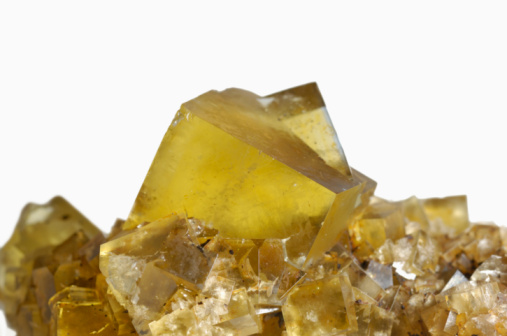
Healing Properties of Fluorite


Fluorite, also known as fluorspar, is the most important natural fluoride. In the past fluorite was known as spatum vitreum or calx fluorata. The current name "fluorite" derives from the Latin word fluere which means "to flow" and pertains to the fact that fluorite was, and still, is used as flow agent in iron smelting. Thanks to its ionic nature, fluorite has the capacity to increase fluidity. It reaches the melting point at 1360°C. This qualities were first mentioned in 1530 by Georgius Agricola in his work on metals.


Fluorite is a halide mineral composed of calcium fluoride. It is an isometric mineral with a cubic habit, although octahedral and even more complex crystal forms are not uncommon. So called crystal twinning is rather common and adds complexity to the observed crystal habits.

Although fluorite gave its name to fluorescence in 1852, not all specimen of fluorite are fluorescent. Many fluorites, however, emit a fascinating blue-violet light thanks to traces of europium, yttrium or organic impurities in crystal lattice.

Fluorite is easily available. It occurs in large deposits in many regions, most notably in the United States, China, Germany, Austria, Switzerland, England, North-Eastern Canada, Mexico, South Africa, and Kenya. 

Fluorite often forms vein deposits with metallic minerals and is often associated with sphalerite, calcite, barite, and quartz. 

Fluorite is regarded to be the most colorful mineral in the world. It comes in many colors. The most common are pink, purple, green, blue, yellow, colorless, and rainbow.
 

In esoteric circles fluorite is believed to be a very powerful healing crystal. It is a stone of protection, especially in the mental sphere. It protects from manipulation and helps one recognize the undesirable outside influences. 

Fluorite creates clarity and awareness, and helps reduce mental and physical stress. It helps maintain focus and concentration and can be used during meditation as a grounding stone. The crystal can facilitate spiritual growth and help attain enlightenment.

Fluorite is considered to be the best purifying stone. It can neutralize and dispel negative energy of any kind. It cleanses and stabilizes the aura. It helps reorganize the flow of energy. It clarifies and purifies energetic chaos and helps create a more harmonious structures. It can be used to neutralize the electromagnetic field emanated by cell phones and computers. 


Fluorite restores inner balance and can be used to heal emotional disorders. It encourages positivity and optimism, helps restore trust in one's own power. Fluorite helps clarify vision and redefine one's purpose in life. It helps eliminate bad habits and destructive behavior.

Fluorite is also very effective on the physical plane. It helps to restore the harmony between the body and the mind and can be used to heal many psycho-somatic disorders. 

Fluorite is believed to boost the immune system and stimulate the regeneration on cellular level. It can be used to heal wounds, ulcers, skin disorders, and inflammatory diseases. 

Because fluorite comes in so many colors, it can be used in chakra meditation to restore the energy flow in respective chakras:
  • red fluorite - root chakra
  • yellow fluorite- solar plexus
  • green fluorite - heart chakra
  • blue fluorite - throat chakra
  • purple fluorite - third eye
This beautiful mineral can be worn as jewelry or placed in living spaces to harmonize the energy flow. It should be placed near TV-sets and computers to neutralize the electromagnetic smog. 


Fluorite absorbs negative energies and has to be purified after each use. 

By Dominique Allmon

*This article was written for educational purposes only and is not meant to diagnose, treat or cure a disease.


Saturday, July 28, 2012

Quiet Food and the Cake the Buddha Ate


A few years ago, while browsing at a Waterfront bookstore in Cape Town, I discovered a true treasure - Quiet food: a recipe for sanity which is a wonderfully illustrated cookbook. The black & white images invite contemplation and you definitely feel like trying out the "Zen pilaf," the "frog in the pond pudding" or the "morning glory" dishes while still perusing the book. Each recipe is more tempting than the last.

Published in 2008 by a Buddhist Retreat Center in Ixopo, South Africa, this is a very special cookbook. I call it an oasis of peace and sanity in a hurried and sometimes very disturbed world.   The experience of preparing and eating food is elevated here to a level that is rather unknown in the fast-paced, modern world. Cooking becomes meditation.

Anyone who loves cooking knows that preparation of a meal can be a very satisfying affair, especially if one can free one's mind from judgment and unnecessary criticism. This unique cookbook seems to remind us of that every time we cut a vegetable or sprinkle herbs into a dish. Cooking is a colorful journey to self-discovery and emotional fulfillment and should be experienced as such.


Last year The BRC issued another jewel - The Cake the Buddha Ate which offers even more delights. This book is just as magnificent as the previous one! 

Both books offer creative recipes for wholesome and nutritious vegetarian dishes that are not too difficult to cook, but take some time to prepare. This, of course, is intended. One has to take some time off from the daily routine and move into a different sphere in order to experience the serenity and wonder of quiet food. 
 
Quiet Food

Both books are wonderfully illustrated and both include delightful kitchen gossip, meditation and spiritual poetry. A rare and delicious treat, indeed.

By Dominique Allmon
 
Dominique Allmon©2012 


To visit the Buddhist Retreat Center website, please click here

Images source Dominique Allmon and Kiyoaki

Saturday, July 21, 2012

Parivrtta Parsvakonasana

Revolved Side Angle Pose or 
Parivrtta Parsvakonasana

By John Schumacher

The universe moves in many ways: straight lines, curves, circles, ellipses, and apparently chaotic patterns. But when I contemplate the movement of things within and without myself - something I do fairly often as a yoga teacher - the pattern I encounter most frequently and ubiquitously is the spiral. The word spiral comes from the Latin spira, meaning to coil, and these coils are everywhere. From the immense Spiral Nebula to the minute spiraling strands of DNA, all of creation simultaneously spins and soars, twirling and swirling in a grand cosmic dance. 

In yoga, no poses so clearly embody the essence of the spiral as twists do.You can find twists within every category of pose: standing, seated, inverted, and reclining. They are powerful cleansing poses, working deeply on the internal organs in a "squeeze-and-soak" action. As you squeeze a sponge to rid it of dirty water, the twists squeeze the abdominal organs, forcing out toxins and waste. Then when you release the twist, fresh blood rushes into those organs, bathing the cells with oxygen and nutrients.

Parivrtta Parsvakonasana (Revolved Side Angle Pose) is an intense twist and, in my opinion, the most difficult of the basic standing poses. It challenges the practitioner's flexibility, strength, sense of balance, and presence of mind. Since this is a difficult asana for even the most experienced practitioner, some intermediate steps can help you learn to better perform the actions of the pose. 

Since most students can’t easily keep their back heel down in this pose, a modified version will be described here with the back heel raised off the floor. See Deepen the Pose below for a brief description of the full pose.  

Step by step instruction

1. Stand in Tadasana. With an exhalation, step or lightly jump your feet 3½ to 4 feet apart. Rest your hands on your hips. Turn your right foot out to the right 90 degrees and turn your left foot in slightly to the right. Align the right heel with the left heel. Firm your thighs and turn your right thigh outward, so that the center of the kneecap is in line with the center of the right ankle. 

2. Exhale and turn your torso to the right until you’re facing directly out over the right leg; as you do this, lift your left heel off the floor and spin on the ball of the foot until the inner left foot is parallel to the inner right foot. Then exhale again and bend your right knee. If possible, bring the right thigh parallel to the floor. Keep your left leg active by pressing the thigh up toward the ceiling and extending strongly through the left heel. At the same time, resist the lift of the left thigh by pressing the tailbone toward the pubis. 

3. With another exhale turn further to the right and lean the torso down, placing the left hand on the floor inside the right foot. Dig your right thumb into the right hip crease and push the thighbone down toward the floor. Firm the shoulder blades into the back ribs and lean the torso back slightly, away from the inner thigh. Stay in this position for a few breaths.

4. If this position seems challenging enough, stay for the recommended time. If you want to go further, bend your left elbow and bring it to the outside of the right knee. Resist the knee and elbow against each other. If possible, straighten your left elbow and reach the hand toward the floor (if you can’t reach the floor, support your hand on a block). You can keep your right hand on your hip, or stretch it over the back of the right ear with the palm facing down. Then turn your head to look at the right arm. As in all twists lengthen and soften the belly, extend the spine with each inhalation, and increase the twist as you exhale. 

5. Stay for 30 seconds to 1 minute. Inhale to come up, exhale to release the twist. Reverse the feet and repeat for the same length of time to the left. Then return to Tadasana.


Article source Yoga Journal
Image source here


Monday, May 21, 2012

Healing Properties of Smoky Quartz

Smoky Quartz Cluster


Smoky quartz is a macro-crystalline variety of quartz. Like other quartz crystals smoky quartz is a silicon dioxide mineral. It usually forms transparent hexagonal, rhombohedral  crystals. Macroscopic crystals commonly occur as horizontally striated hexagonal prisms terminated by a combination of positive and negative rhombohedrons forming six sided pyramids. 

The name smoky quartz derives from the smoky color that ranges from grayish-brown to dark brown and even black. The smoky color results from natural exposure to radiation. It forms from free silicon that was released from silicon dioxide during the formation of crystals. Smoky quartz is a rather prevalent mineral that is mostly mined in Colorado, USA, in Brazil, Australia, Madagascar, Switzerland, and Scotland where it is considered to be a national stone. 

Since ancient times smoky quartz was used in many cultures because it was rather easy to cut it to gems and ornaments. This beautiful crystal was considered sacred by the Druids. In shamanic cultures smoky quartz was used in rain gathering ceremonies. The gem was often found on top of the ritual wands used by some of the North American native tribes, especially the Cherokees. Smoky quartz was also popular for making snuff bottles in ancient China. Ancient Romans used it for carving intaglio seals. 

In esoteric circles smoky quartz is regarded as a grounding stone providing physical and psychic protection from negative energies. It can help remove negative energy and transform negativity of any kind into positive energy. It can be used to cleanse the aura.

Smoky quartz is considered to be a stone of abundance and a luck bringer. In difficult times it helps enhance the survival instinct and determination as it keeps one's mind focused on success and the realizations of personal goals and dreams. It enhances intuition and promotes personal pride and joy.

It helps elevate mood and gently remove emotional blockages. It can transform negative emotions such as fear, anger and jealousy into positive energy. It helps clear mental clutter and promotes focus. It brings calm and serenity and helps relieve grief and depression.

Smoky quartz is considered to be a perfect stone for meditation as it helps refine the vibratory energies within body and create clarity of the mind thus facilitating access to subconscious wisdom. It grounds during the meditation and facilitates alignment between the lower and higher selves. It activates the flow of the kundalini energy and enables access to higher states of consciousness. The gem also helps accept one's own sexuality.

The gem is associated with the root chakra and is, therefore, believed to promote physical health of organs of the abdomen including stomach, kidneys, adrenals, pancreas, and the reproductive organs. It can help alleviate leg cramps and ease the hip pain. It can even cure headaches. Smoky quartz promotes detoxification, regulates body fluids and facilitates the healing process. 

For healing purposes smoky quartz crystals can be placed on the body, especially where pain is experienced. To reduce stress it is suggested to hold a crystal in each hand and sit quietly for a few moments. Smoky quartz can be used to produce gem elixir that gently works within the body.

This amazingly beautiful mineral can be placed in any room of the house to purify and balance the energies. It is believed that smoky quartz placed in the bedroom near or around the bed helps the couple to overcome communication problems.

For best results make sure that you purchase natural smoky quartz crystals. Artificially irradiated crystals are dark and opaque and may not bring the same healing results.

By Dominique Allmon

Creative Commons License
Healing Properties of Smoky Quartz by Dominique Allmon is licensed under a Creative Commons Attribution-NonCommercial-NoDerivs 3.0 Unported License.
 

*This information is for educational purposes only and is not meant to diagnose, treat or cure a disease. 


Saturday, March 17, 2012

Clear Your Mind!


By Steve Hagen

Meditation begins now, right here. It can't begin someplace else or at some other time. To paraphrase the great Zen master Dogen, "If you want to practice awareness, then practice awareness without delay." If you wish to know a mind that is tranquil and clear, sane and peaceful, you must take it up now. If you wish to free yourself from the frantic television mind that runs our lives, begin with the intention to be present now.

Nobody can bring awareness to your life but you.

Meditation is not a self-help program - a way to better ourselves so we can get what we want. Nor is it a way to relax before jumping back into busyness. It's not something to do once in awhile, either, whenever you happen to feel like it.

Instead, meditation is a practice that saturates your life and in time can be brought into every activity. It is the transformation of mind from bondage to freedom.

In practicing meditation, we go nowhere other than right here where we now stand, where we now sit, where we now live and breathe. In meditation we return to where we already are - this shifting, changing ever-present now.

If you wish to take up meditation, it must be now or never.
 

Monday, March 5, 2012

Healing Properties of Malachite


Malachite Crystal

Malachite is a hydrous copper carbonate that is responsible for the greenish hue of a tarnished copper and bronze. It is often results from weathering copper ores and is often found with azurite and calcite. It has a vibrant color that can vary from bright to dark green.

Malachite crystallizes in form of monoclinic crystal system and most often forms botryoidal, fibrous, or stalagmitic masses. Individual crystals are rather rare but do occur as slender to acicular prisms.

The name malachite most probably originates from the Greek  word malachos which means soft, but it was also called molochitis lithos - mallow-green stone because it resembles the leaves of the mallow plant.

Large quantities of malachite are mined in Israel, Russia, Congo, Namibia, Zambia, and in Mexico. In the United States it mostly occurs in the South West, especially in Arizona.

Malachite was known in Egypt as early as ca 4000 BC. Ancient Greeks made malachite amulets for the protection of their children. During the Middle Ages malachite was believed to protect from black magic and sorcery.The stone was also used to protect travelers from accidents and other evils of a journey. It was often placed in the bedroom to protect the sleeping person from nightmares. For centuries malachite was used by artists as a mineral pigment in green paints, but was later replaced with synthetic pigments.

Malachite is considered to be a very powerful healing crystal that has the potential to amplify the energy. It can help clear and remove past traumas and deep seated negative emotions, but some caution is advised. The healing process might be too overwhelming as the stone is able to amplify both, the positive and the negative energies. The stone should be cleansed before each application. The best way to cleanse malachite crystals is to place them in the sun or on a quartz crystal cluster.

Malachite is regarded as a stone of transformation that helps facilitate change. It helps to clear and activate the chakras and re-arrange the energy pattern in the body. It is particularly useful in balancing the heart chakra and opens this energy center to unconditional love. It helps to clarify thoughts and break old patterns of behavior. It encourages decision making process, determination and acceptance of change. It teaches one to assume responsibility for his own thoughts, feelings, and actions. It clarifies the thinking process, strengthens intuition and enables deep insight.

Malachite can be used to alleviate many physical conditions, especially those associated with heart and blood circulation. It is believed to enhance the immune system and activate liver, pancreas and spleen. It can help detoxify the body at the cellular level and remove chemical pollutants and radiation from the system.

The stone can be placed on the body during a crystal therapy session. It can also be worn as a jewelry. However, malachite encased in metal is believed to lose its healing power.

Malachite is a beautiful mineral and, like many other crystals, it can bring a beautiful energy to any space. Its green color is calming to the mind and induces relaxation.

By Dominique Allmon

*This article was written for informative purpose only and is not meant to diagnose, treat or cure a disease.


Creative Commons License
Healing Properties of Mlachite by Dominique Allmon is licensed under a Creative Commons Attribution-NonCommercial-NoDerivs 3.0 Unported License.

Wednesday, January 18, 2012

Dreamlands Beyond the Veils


The key to the hidden lands beyond those veils lies in the letting go of all hope, fear and expectation. The portal opens when one realizes that one no longer needs to seek it and must simply open to that which is already fully present. In that vastness in which nothing is hidden and nothing needs to be revealed, all is transparent, clear, and the doors, in response, open everywhere. - Ian Baker

Tuesday, January 10, 2012

Universal Consciousness


Infinite worlds appear and disappear in the vast expanse of my own consciousness, like motes of dust dancing in a beam of light. - Yoga Vasishtha

Each of us exists as a ripple in the field of conscious intelligence that gives rise to everything in the universe - our bodies, our planet, the stars, the galaxies...

Since we are an inseparable part of this underlying field of intelligence, we are also the source of all reality. In every moment of our existence we are co-creating our world with and in the universe. Everything we will ever know is a result of this creative process that takes place in our minds.

Both, the ancient wisdom traditions and modern science, tell us that our bodies, our minds, and the physical world around us, are projections of our consciousness. Only consciousness is real. Everything else is its projection. For better or for worse.

It is only the veil of illusion, or rather, and more properly, the veil of delusion - known in the ancient yogic tradition  as maya - that keeps us from seeing that everything is pure consciousness. We delude ourselves constantly. We mis-take our own experience for the reality out there. We experience ourselves as separate from all that is.

However, when we pierce this veil, when we begin to finally see through it, we discover that universal consciousness permeates everything. Only then, we will be able to access our own unlimited creative potential.

By Dominique Allmon

Dominique Allmon©2012